SMVAF Celebrates Customer Service Week under the Theme “Mission Possible”
October 7, 2025
Road safety month campaign
November 17, 2025Minister of Finance Hon. Neal Rijkenberg, Justice Sabelo Masuku, and SMVAF Chairman Zithulele Gina lead a strong call for policy reform, integration and collaboration across borders
By Own Correspondent
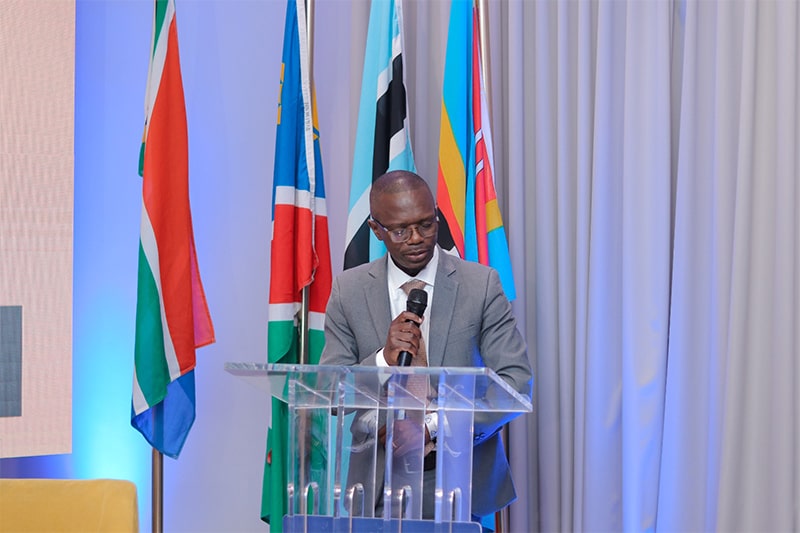
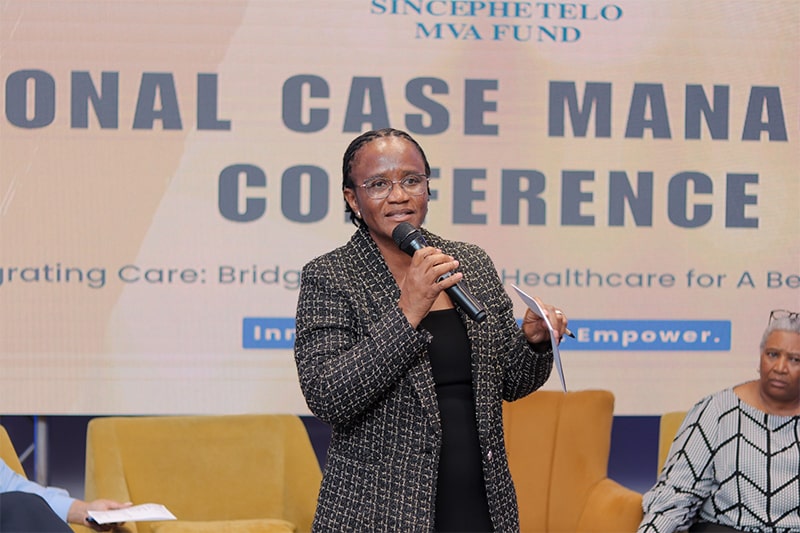
The Regional Case Management Conference, hosted by the Sincephetelo Motor Vehicle Accident Fund (SMVAF) at the Hilton Garden Inn in Mbabane, closed on a high note — with resounding calls for policy transformation, digital innovation, stronger prevention, and people-centred care.
The three-day conference, held under the theme “Integrating Care: Bridging Gaps in Health Care for Better Outcomes”, brought together over 100 delegates from Eswatini, South Africa, Botswana and Namibia. The meeting was described as a turning point for the region’s post-crash care system, blending medical, legal, and social perspectives to create a more responsive and compassionate model of support for accident victims.
Minister Rijkenberg – Tripling Compensation Reflects Deeper Care
Minister of Finance, Hon. Neal Rijkenberg, lauded SMVAF’s regional leadership and confirmed that Government is currently considering legislative reforms to increase the Fund’s compensation threshold from E1 million to E3 million.
He explained that this adjustment would ensure the Fund remains responsive to the rising costs of medical treatment, rehabilitation, and long-term support for survivors.
“The Sincephetelo MVA Fund has long been a pillar of social protection in Eswatini. Its evolution from a compensation-focused institution to a proactive, patient-centred organisation is commendable,” the Minister said.
“The SMVAF continues to fulfil its central role: compensating road accident victims and restoring livelihoods. Over E775 million has been disbursed in claims over the last four years, directly supporting individuals and families in their most vulnerable moments,” the Minister said.
The current compensation limits disbursed by the SMVAF also include E10,000 for funeral expenses, E350,000 each for loss of earnings and loss of support, and E150,000 for general damages (pain and suffering)6. Over the last four years, the SMVAF has disbursed over E775 million in claims, supporting individuals and families.
“Every Lilangeni spent on integrated care is an investment in human capital, economic productivity, and national resilience,” he added.
The Minister reaffirmed that the Fund’s transformation aligns with Eswatini’s Sustainable Development Goals, especially Goal 3: Good Health and Well-being, ensuring that no patient is left behind.
“Integrated care is the bridge that connects this vision to reality. It ensures that no patient is treated in isolation, that physical healing is supported by mental and social rehabilitation, and that our systems work together, not in silos, to deliver better outcomes”.
This commitment is backed by fiscal policies like outcome-based budgeting and support for digital health systems.
Minister Rijkenberg called for collective action, saying, “Together, let us bridge the gaps, strengthen our systems, and build a healthcare future where every recovery is a shared triumph”.
“Integrated care is the bridge that connects vision to reality. It ensures that physical healing is supported by mental and social rehabilitation — that our systems work together, not in silos,” he said.
Meanwhile, the proposed increase in compensation, he noted, “signals deeper care for victims and their families.”
Justice Sabelo Masuku: Transform or Die, Law Must Evolve With Innovation
Delivering a critical and thought-provoking legal address, High Court Judge, Justice Sabelo Masuku, delivered a stark message to delegates: the region’s legal systems governing accident compensation and recovery must evolve rapidly to remain relevant in a world defined by swift technological advancement and complex medical needs.
“If you do not transform, you die,” he declared, stressing that inertia is not an option for institutions entrusted with public welfare. He insisted that the fundamental mission of sister funds must be perpetually focused on serving the dignity of road trauma survivors: “Our mission must be rooted in transformation, full service, and unwavering commitment to the human dignity of those affected.”
Justice Masuku cautioned that current legislation must be future-focused and adaptable, otherwise it risks becoming a costly impediment to justice. He called for foresight in legal drafting, specifically referencing the need for the law to accommodate emerging realities such as the proliferation of driverless and electric vehicles (EVs). He emphasized that the financial architecture of compensation, including funding structures and levies, must be elastic enough to handle these future risks.
“Legislation must not lag behind innovation,” the Judge stated. “We must ensure the law empowers our systems to move at the speed of change so that survivors are never denied justice or timely care due to outdated statutes.”
To close existing gaps in the system, Justice Masuku passionately called for deeper collaboration between medical and legal frameworks. He underscored that true efficiency in case management meaning faster, more compassionate outcomes for survivors, requires several key shifts:
- Shared Data Protocols: Implementing systems for transparent and rapid exchange of information between medical institutions and legal entities.
- Accelerated Decision-Making: Streamlining bureaucratic processes that often delay much-needed compensation and rehabilitation services.
- Compassionate Enforcement: Ensuring the application of justice is not only fair but delivered with empathy and an understanding of the trauma involved.
He praised the SMVAF’s leadership for convening this crucial regional dialogue and commended the conference for successfully bringing together experts from the diverse health, legal, and financial sectors in one space to forge integrated solutions. He concluded that this collaborative spirit is essential for uplifting the welfare of citizens across the region.
Chairman Gina: Prevention Is the Most Sustainable Form of Care
SMVAF Board Chairman, Zithulele Gina, delivered a passionate and unequivocal address, declaring a national crackdown on reckless driving is urgently needed. He stressed that tougher fines and strengthened law enforcement are critical levers, arguing that proactive prevention is far more sustainable and fiscally responsible than perpetual compensation.
“Prevention is the most sustainable form of care,” Gina stated forcefully. “That begins with stronger law enforcement and ensuring traffic fines truly serve as a significant deterrent to bad behaviour on our roads.”
He noted that Eswatini, consistent with troubling regional trends, continues to bear an unacceptably high human and financial cost from road crashes—a burden that severely strains the Fund’s capacity. Gina emphasized that these massive expenditure outflows could be significantly curtailed through proactive enforcement and widespread behavioural change, underscoring the necessity of shifting the nation’s focus from merely managing tragedy to actively preventing it.
A Moral Imperative: Holistic Care Beyond Compensation
Beyond the focus on deterrence, Chairman Gina affirmed the Fund’s moral obligation to survivors, stating that the conference theme, “Integrating Care”,reflected a profound commitment that transcends mere policy. He eloquently described the survivor’s challenging path: “The journey of a road accident survivor does not end at the hospital gate; it continues through rehabilitation, psychological healing, social reintegration, and economic empowerment.” This statement positions the SMVAF as a holistic partner in recovery, not just a financial institution.
The Chairman highlighted the Fund’s commitment to digital transformation, noting ongoing efforts to digitize claims, improve case tracking, and enhance data transparency, thereby building an efficient, modern service infrastructure. Furthermore, he proudly aligned SMVAF’s core operational agenda with the UN’s Sustainable Development Goals (SDGs), specifically the pursuit of universal health access and national resilience, showcasing the Fund’s positive role in the broader national development landscape.
The Power of Partnership
Gina concluded by appealing to all sectors for collaborative action, reinforcing that true success requires shared responsibility.
“Integration requires partnership, from government, the private sector, and crucially, from dedicated healthcare professionals. Their expertise, dedication, and empathy make this possible,” he stated. He summarized the Fund’s philosophy with a powerful positive statement: “Ultimately, bridging gaps in healthcare is not just a technical challenge; it is a human imperative that we are determined to meet.”
Sam Mzileni , Corporate Executive (Controlling Officer) at SMVAF – Regional Unity and Innovation for a Resilient Future
Mzileni, delivered a stirring address reflecting on the profound significance of hosting the regional conference. He emphasized that the assembly was much more than a routine professional gathering; it was a powerful reaffirmation of a long-standing partnership among the region’s motor vehicle accident funds (MVA Funds).
“This gathering is more than a professional convening, it is a reaffirmation of our shared mission: to restore lives and uphold the dignity of those affected by road crashes,” Mzileni stated. He highlighted the extensive groundwork and shared purpose that led to the event, noting that the conference was the tangible result of months of intensive collaboration among CEOs and executives across the four participating countries. This sustained effort, he argued, clearly demonstrates a shared vision to build resilient and compassionate systems of care.
Mzileni urged the delegates to move past theoretical discussions, emphasizing that knowledge is useful only when applied to solve real-world problems.
“Let this be a platform not only for dialogue but for action, action that will echo in the lives of those we serve,” he implored. He insisted that the true value of regional collaboration lies in the efficient transfer and implementation of best practices gleaned from sister funds, thereby accelerating system improvements across the region.
He placed significant focus on the need for technological adaptation to future-proof the industry, but with a critical regional lens.
He challenged professionals to embrace innovation, specifically calling for the strategic deployment of Artificial Intelligence (AI) to improve administrative efficiency, enhance fraud detection, and personalize patient care pathways.
He stressed the urgent need to look inwards for answers: “We must adapt to technology, but we must also seek local solutions.” He offered a pragmatic caution against blindly following costly foreign models: “Western models are becoming increasingly costly and sometimes contextually irrelevant. We must instead research and confidently apply traditional, context-suited solutions that are tailored to our unique regional and cultural context, ensuring the longevity and effectiveness of the Funds’ operations.”
Holistic Care: Addressing Mental Health
Mzileni urged the delegates to move past treating just physical wounds, emphasizing that holistic recovery is impossible without robust mental health support.
He stressed that the trauma of a crash often leaves invisible, lasting scars: “We must fully acknowledge and address the psychological burden of road trauma, including Post-Traumatic Stress Disorder (PTSD), anxiety, and depression. Our care models must not merely offer physical rehabilitation; they must also provide counselling, trauma-informed therapy, and social integration programs to ensure survivors can truly rebuild their lives.” This focus elevates the Fund’s service from physical treatment to comprehensive human restoration.
Some of the key highlights and the Way Forward
The conference concluded with several resolutions aimed at improving regional road crash response and care systems:
- Tripling of Compensation. The proposal to increase the claims threshold from E1 million to E3 million will be fast-tracked through legislative reform.
- Strengthened Road Safety Enforcement. Member countries committed to advocating for stiffer fines and stronger policing to curb reckless driving.
- Future-Focused Legal Frameworks. Governments were urged to modernise laws to cater for emerging technologies like electric and driverless vehicles.
- Digital Transformation. All funds will expand digital platforms for claims management, rehabilitation tracking, and inter-agency coordination.
- Mental Health and Reintegration. Greater emphasis will be placed on psychosocial care, counselling, and economic empowerment of survivors.
- Regional Collaboration – The sister funds reaffirmed their partnership, pledging continued dialogue, knowledge-sharing, and cross-border support.
A Shared Vision for Sustainable Healing
As delegates parted ways, one shared conviction stood out: integration is the key to sustainable recovery. The conference ended with renewed unity, energy, and purpose — a collective commitment to restore lives, protect dignity, and build safer roads for all.
“Together, let us bridge the gaps, strengthen our systems, and build a healthcare future where every recovery is a shared triumph,” concluded Minister Rijkenberg.